 EN
EN
 AR
AR
 FR
FR
 PT
PT
 RU
RU
 ES
ES
 ID
ID
 TH
TH
 KO
KO
 JA
JA
 VI
VI
 NL
NL
 IT
IT
 DE
DE


Pneumatic Cylinders in Food Packaging: Driving Efficiency, Cleanliness, and Precision in Automated Packaging Lines
Pneumatic Cylinders in Food Packaging: Driving Efficiency, Cleanliness, and Precision in Automated Packaging Lines
1. Overview: The Core Power of Food Packaging Automation
A pneumatic cylinder is an actuation device that converts the energy of compressed air into mechanical linear motion. Through the reciprocating movement of a piston inside a cylinder barrel, it delivers thrust and stroke to perform work. In the food packaging industry, pneumatic cylinders have become indispensable core drive components on modern production lines, thanks to their high speed, high efficiency, cleanliness, safety, low cost, and ease of maintenance.
Food packaging places exceptionally strict demands on hygiene, reliability, and precision. Pneumatic cylinders meet these challenges through the use of stainless steel barrels and food‑grade seals, which effectively prevent product contamination. With IP65 or higher protection ratings, they resist cleaning agents and withstand the frequent wash‑down procedures common in food plants. Pneumatic actuators and control valves are favoured for their clean operation, especially when using oil‑free air, which minimises contamination risks in sanitary food processing environments. On a milk‑powder packaging line, for example, a single distribution machine uses 16 cylinders to precisely control the opening and closing of covers, ensuring accurate bag counts for every package. The stable performance of cylinders is precisely what guarantees packaging accuracy and production efficiency.
2. Typical Applications of Pneumatic Cylinders in Food Packaging
2.1 Forming, Filling, and Sealing
During the forming stage, cylinders provide accurate and reliable power for material forming, container filling, sealing, and labelling. In the bag‑making process for snacks and frozen foods, cylinders push finished bags onto conveyors to transfer them to the next station. For sealing, cylinders drive heated plates downward, bonding packaging materials under controlled pressure and temperature to create a secure seal.
Horizontal food packaging equipment is a classic example of cylinder application. In such a system, a power cylinder is mounted longitudinally on the frame, with its piston rod connected to a carrier plate. Long‑shaped food items are placed lengthwise on the feed plate; a cutting cylinder lowers a blade to portion the product, and a feeding cylinder then pushes the cut pieces into packaging bags. A drive cylinder actuates a swing lever to arrange the cut pieces neatly, preventing disorder. The coordinated action of multiple cylinders enables a fully automated process from portioning to bagging, significantly enhancing both efficiency and consistency in horizontal packaging.
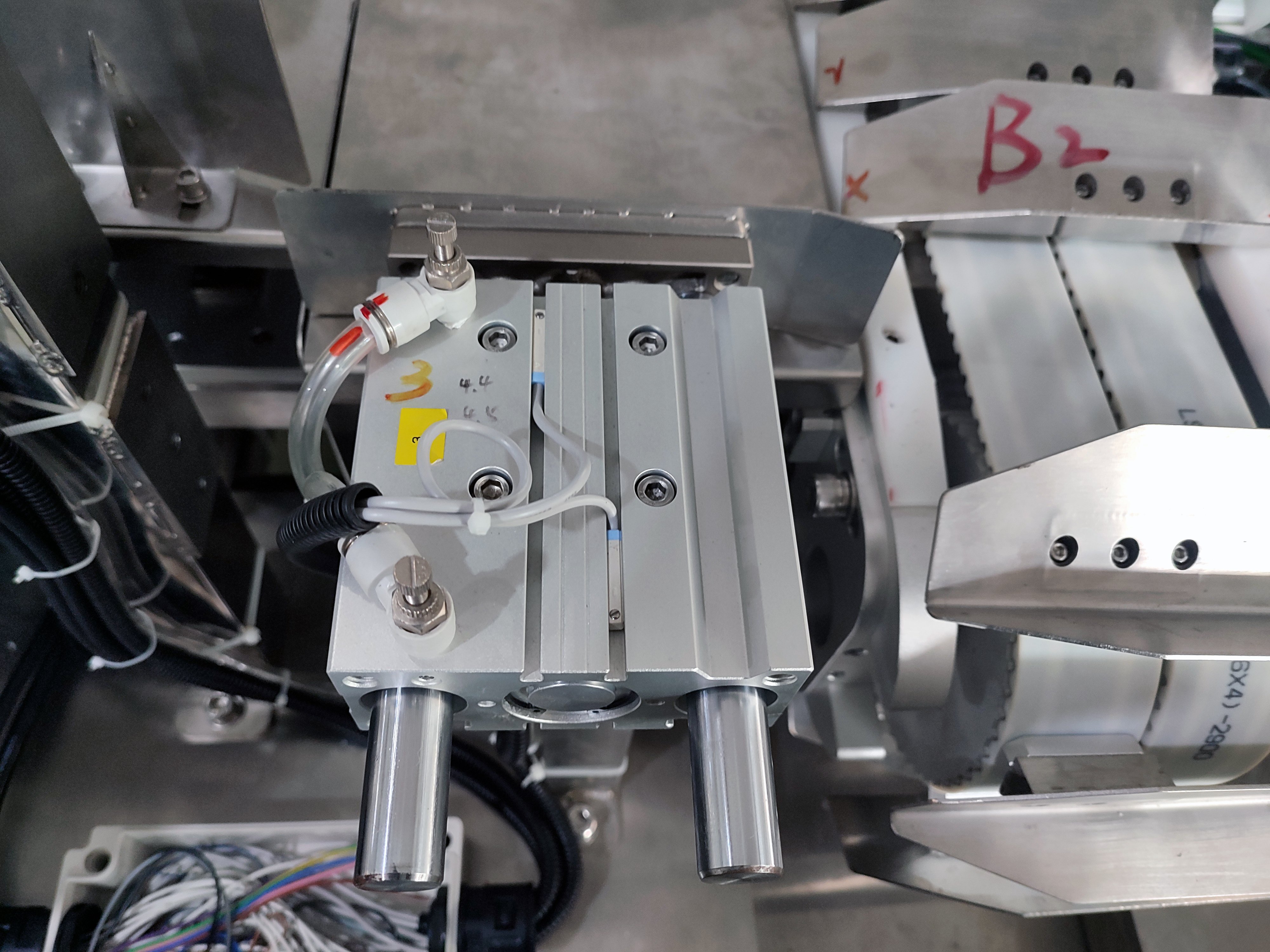
In cartoning, cylinders play a critical role as well. Fully automatic cartoning machines, controlled by PLCs, utilise cylinders for suction, pushing, pressing, and opening cartons, completing the entire sequence of erecting, loading, and closing boxes. In modified‑atmosphere packaging for boxed foods, cylinders drive the movement of upper moulds, gas‑filling heads, and exhaust heads to enable continuous production. Cylinder‑driven mechanical grippers, often using rack‑and‑pinion mechanisms, achieve precise picking and flipping, packing materials tightly and making the best use of carton volume.
2.4 Case Packing and Palletising
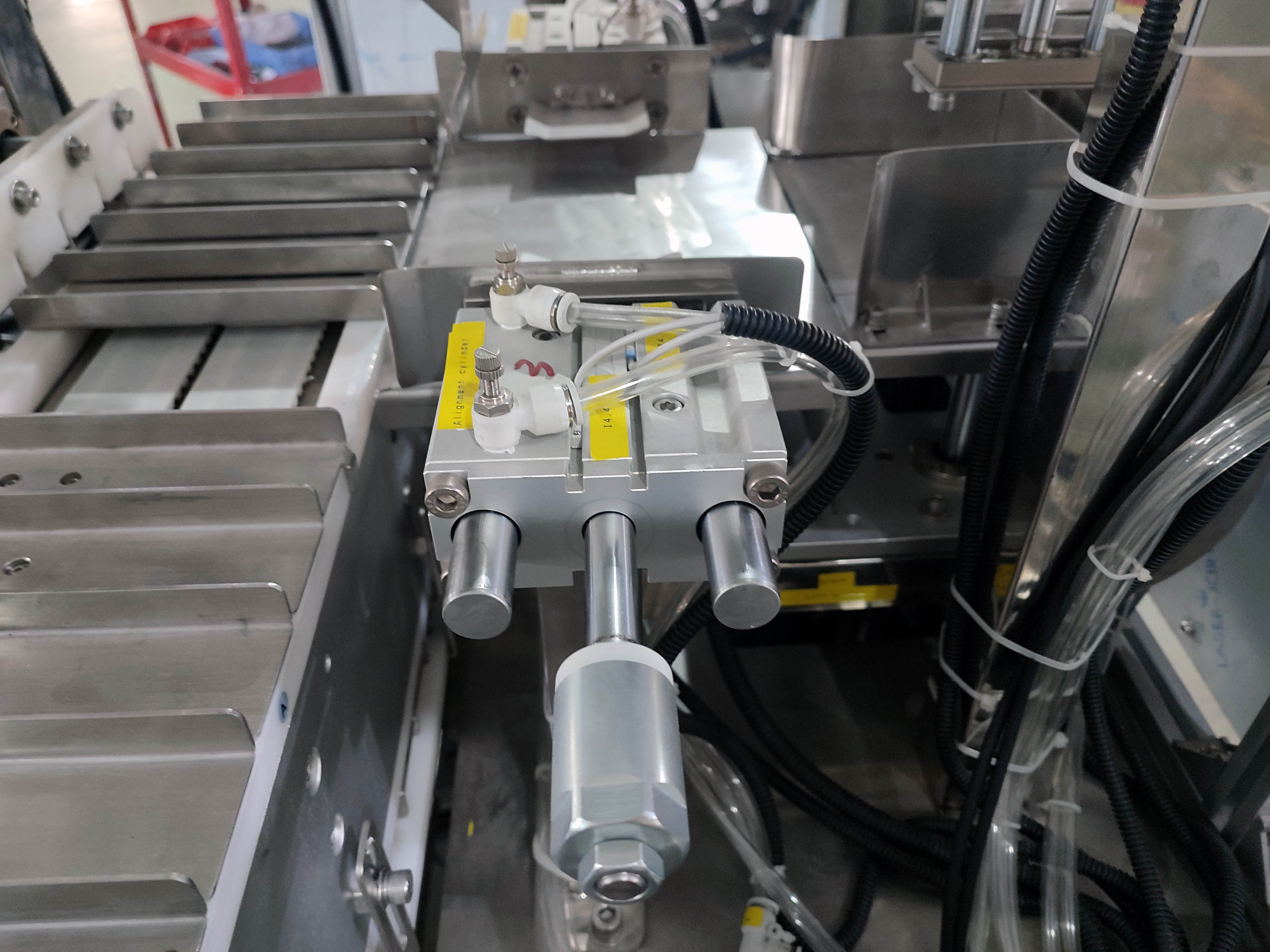
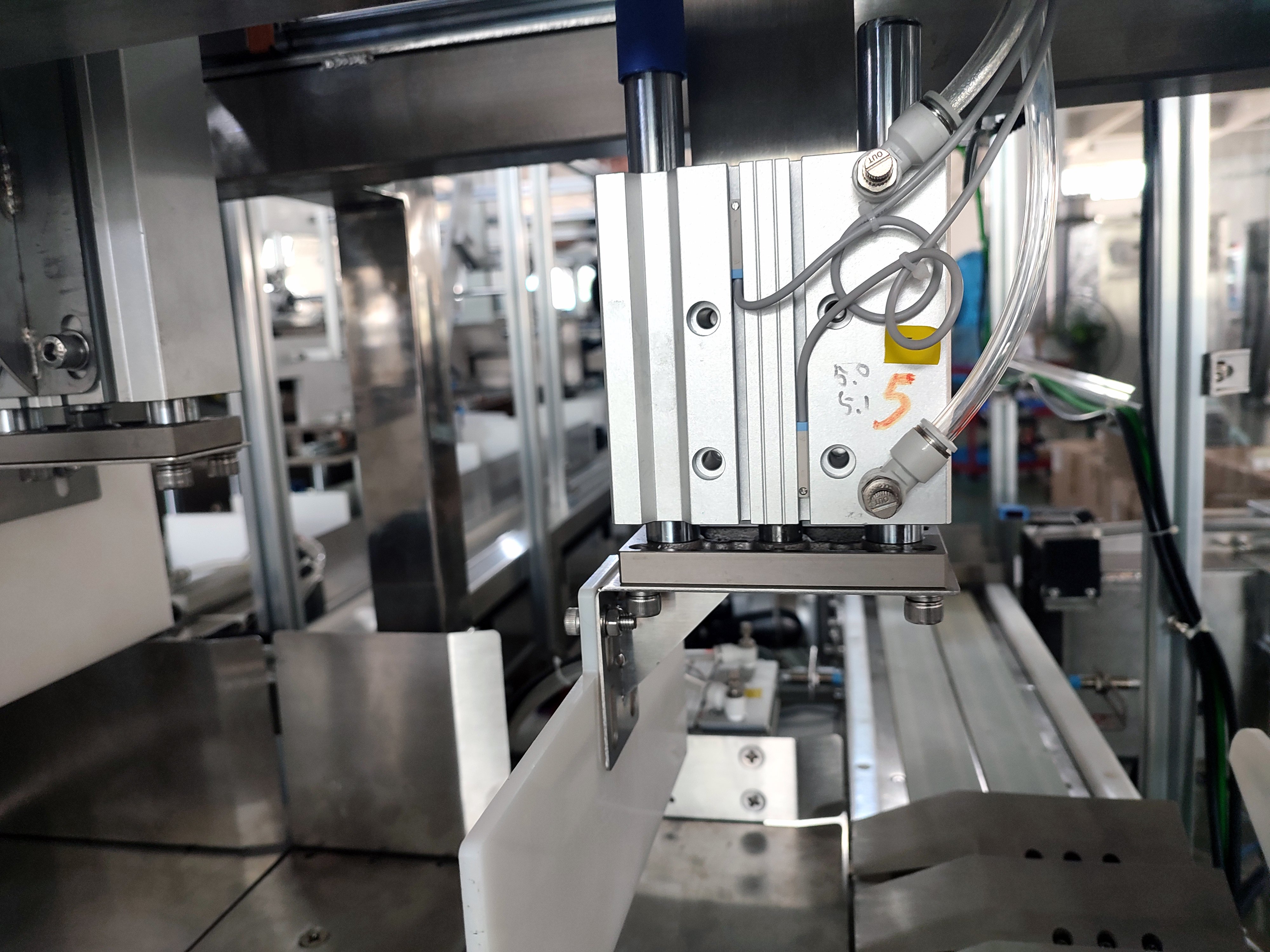
During case packing, cylinders are commonly paired with grippers to pick and place products. By controlling cylinder extension and retraction, grippers accurately grasp packaged goods and place them into cartons along a programmed trajectory. Xiwang Food’s production‑line robotic packer employs a two‑stage cylinder linkage: depending on the carton size, the system selects either a single cylinder or dual cylinders to extend, enabling the gripper to reach any position inside the carton, thus perfectly adapting to various box dimensions. In palletising, cylinder‑driven grippers, lifting mechanisms, and rotating units ensure neat and stable stacking.
2.5 Labelling and Ancillary Operations
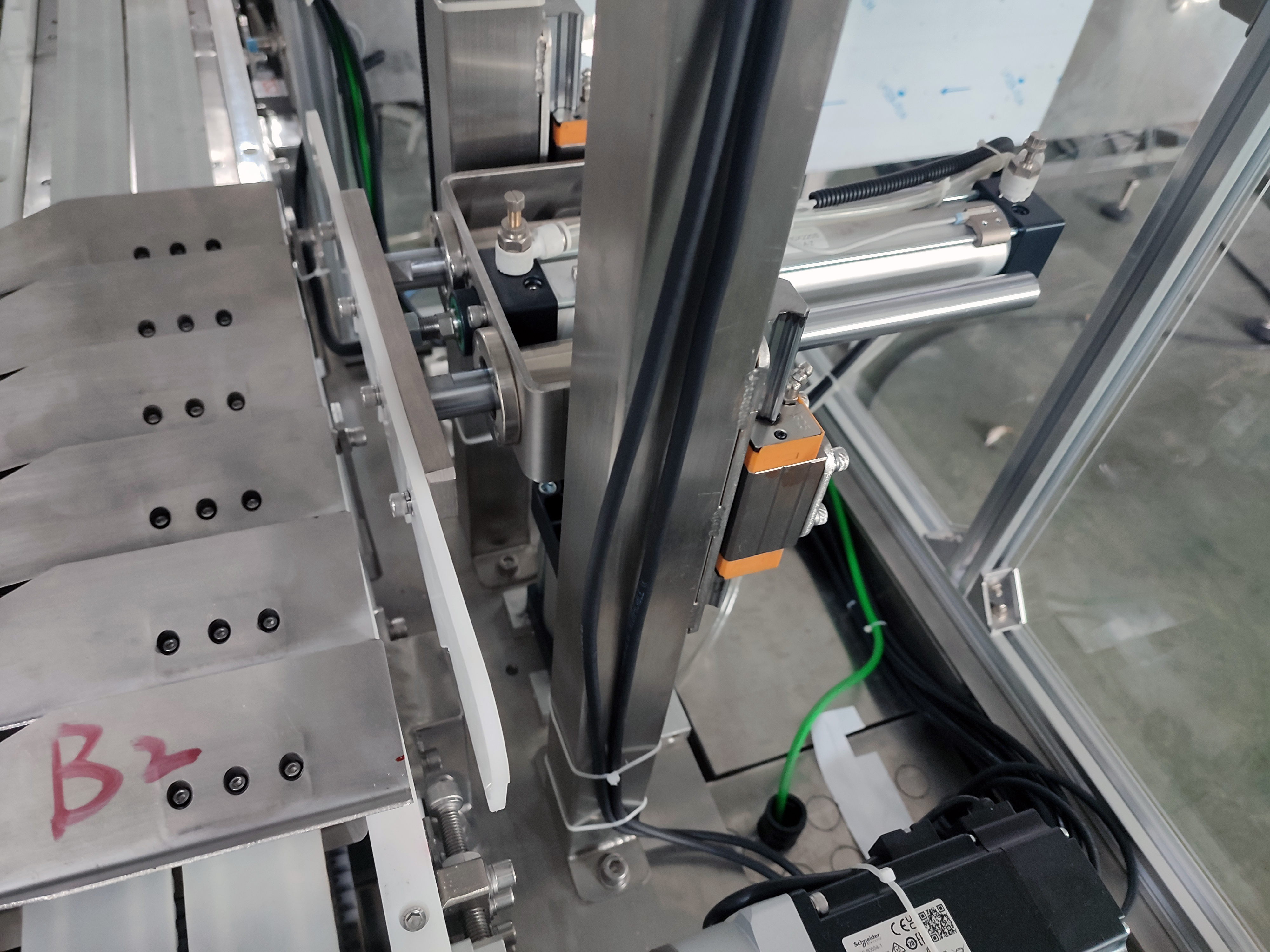
In labelling, cylinders push the labelling head against the product surface to ensure flat and firm application. Additionally, cylinders are used in material handling – pushing plates to align items – and in cutting units where they drive blades for precise film trimming.
3. In‑Depth Analysis of Cylinder Advantages in Food Packaging
Advantages in Horizontal Packaging: Seamless Synchronisation
In horizontal packaging, multiple cylinders work in precise synchronisation to form a complete automation chain: the power cylinder moves the carrier plate longitudinally, the cutting cylinder performs accurate portioning, the feeding cylinder inserts products into bags, and the drive cylinder ensures orderly alignment. The timing of each cylinder is meticulously orchestrated by the control system, enabling a seamless transition from cutting to bagging that eliminates contamination risks and bottlenecks associated with manual handling.
Advantages in Cartoning Machines: Multi‑station Coordination and Flexibility
Cartoning machines rely on the coordinated efforts of several cylinders – suction cylinders for erecting cartons, push cylinders for loading products, and press cylinders for closing lids. Photoelectric and magnetic sensors monitor each station to maintain precision and stability. The flexible configuration of multiple cylinders allows the machine to adapt quickly to different carton sizes, meeting the requirements of multi‑product, small‑batch production common in the food industry.
Advantages in Case Packing: Smart Linkage and High Efficiency
The core benefits of cylinders in case packing lie in intelligent linkage and size adaptability. The two‑stage cylinder design enables the robotic gripper to adjust its force according to carton dimensions; combined with T‑slot rails and guide rods, the gripper can accurately reach any point inside the carton. Pneumatic transmission not only safeguards hygiene standards but also offers fast response, excellent environmental tolerance, and long service life.
4. Conclusion
Pneumatic cylinders serve as the heart of automation in food packaging, delivering high speed, cleanliness, precision, and reliability across the entire workflow – from forming, filling, and sealing to horizontal packaging, cartoning, case packing, labelling, and more. Whether through the seamless synchronisation of multiple cylinders in horizontal packaging, the multi‑station coordination in cartoning machines, or the intelligent size‑adaptation in case packing, cylinders are continuously driving the industry toward greater efficiency, hygiene, and intelligence. As food packaging demands ever‑higher efficiency and flexibility, the thoughtful application of pneumatic cylinders will remain a solid technical foundation for optimising packaging processes well into the future.