 EN
 AR
 FR
 PT
 RU
 ES
 ID
 TH
 KO
 JA
 VI
 NL
 IT
 DE


Applications of Vision Sensors in Automated Packaging Production Lines
Applications of Vision Sensors in Automated Packaging Production Lines
In an automated packaging workshop, equipment needs a pair of “eyes” that can understand the product. Vision sensors are exactly that pair of eyes—they enable machines not only to know that “something has passed,” but also to judge “whether it is correct, whether it is positioned accurately, and whether it is printed clearly.” As packaging lines move toward higher speeds and greater flexibility, vision sensors have evolved from auxiliary tools into core components that safeguard quality and efficiency.
What Is a Vision Sensor?
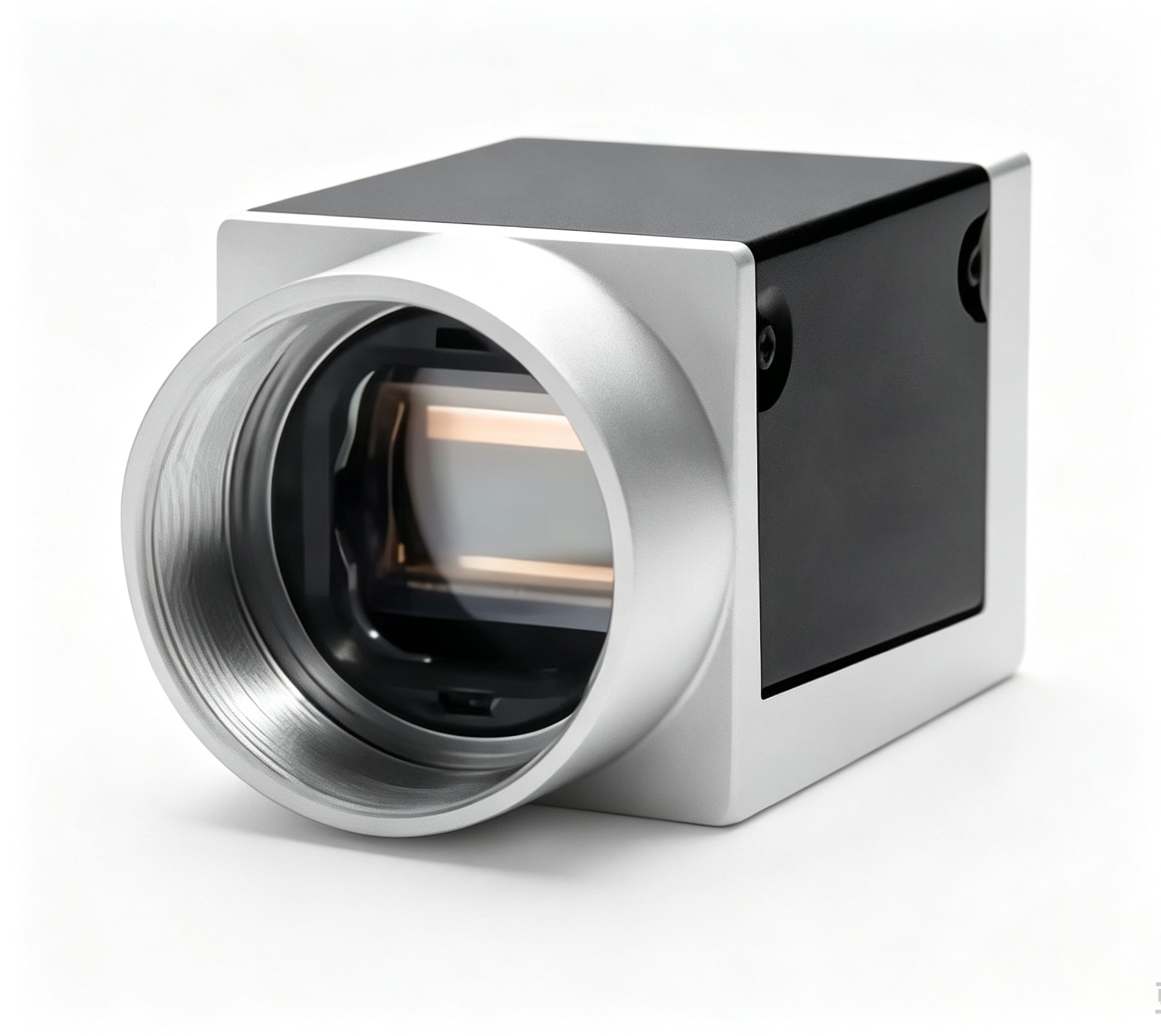
A vision sensor is a compact industrial device that integrates image acquisition and processing capabilities. It houses the lens, light source, image sensor, and processor in a compact enclosure. Once powered on and aimed at the workpiece, it can independently complete the entire process of “capturing an image—analyzing it—outputting a judgment,” without requiring an external industrial PC. Unlike industrial cameras that only output images, vision sensors come with built-in algorithms and computing power. They can directly provide OK/NG results or coordinate data at the device level, offering low deployment barriers and fast response times. They are well suited for high-frequency, clearly defined standardized inspection tasks on production lines.
Functions of Vision Sensors
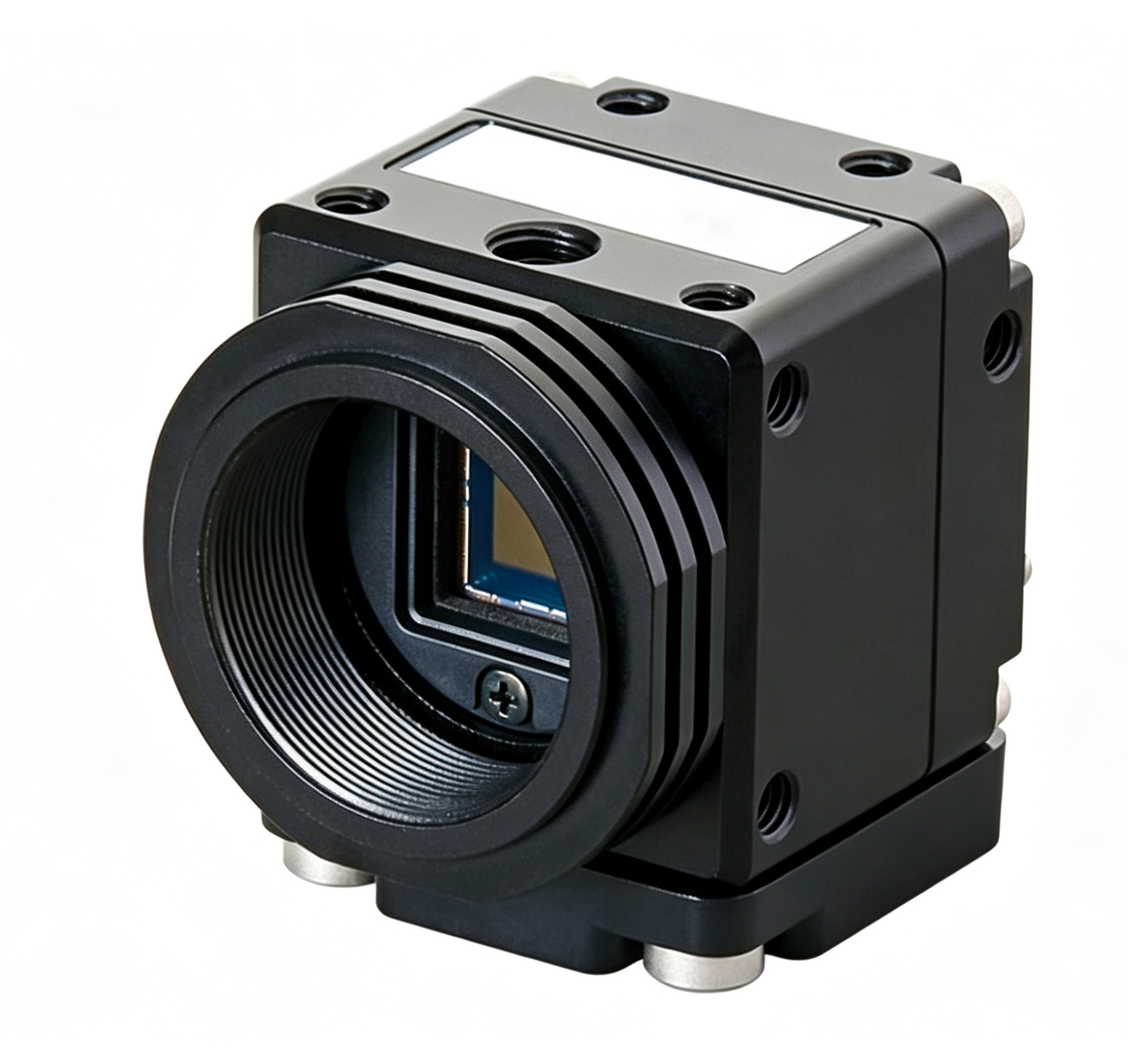
In industrial scenarios, the functions of vision sensors can be grouped into four basic categories:
Identification — reading characters, barcodes, colors, shapes, and other feature information for traceability, verification, and classification. Positioning — outputting the coordinates and angles of target objects to guide robots or actuators in grasping, placement, and correction. Measurement — calibrating image pixels to actual dimensions to perform high-precision geometric measurements such as length, diameter, and spacing. Inspection — determining whether a product has defects or abnormalities, including missing components, poor printing, surface damage, and seal failure. These four capabilities are embedded in various forms across different processes on packaging production lines, forming full-line visual control from feeding, forming, filling, and sealing to labeling and palletizing.
Applications in Automated Packaging Production Lines
Feeding and Cartoning: Flexible Positioning Guided by Vision
The first checkpoint on a packaging line is accurately feeding incoming materials into the workstation. Traditional fixed-path mechanisms are prone to jamming when incoming materials are misaligned or specifications change. The introduction of 3D vision systems gives robots the ability to perceive material posture in real time. In a pharmaceutical packaging line project in Shanghai, 3D vision works with a robotic arm to grasp bundles of medicine boxes and feed them precisely, achieving positioning accuracy of ±0.1 mm and adapting to a high-speed cartoning rate of 380 boxes per minute, while incorporating a built-in compliance data traceability module. In fruit packaging, 3D laser profile sensors are used to detect the exact center position of each pocket on a tray. Even with black high-gloss plastic trays or molded pulp trays, they can complete millimeter-level positioning while the conveyor is running, guiding a gantry robot to place apples into the correct pockets one by one without stopping for recipe adjustments when packaging specifications change.
Filling and Sealing: Inline Judgment of Fill Level and Seal Integrity
Whether the fill volume meets specifications and whether the seal is intact directly affects product compliance and shelf life. In this process, vision sensors play the role of a “non-contact measuring tool.” On beer filling lines, high-precision vision systems can simultaneously perform full inspection across multiple scenarios, including cap sealing, fill level, inkjet coding, and label positioning. For pharmaceutical and food packaging, vision solutions combining multiple cameras and transmitted light can determine in a single inspection whether the fill level is within tolerance, whether the cap is tilted, and whether the safety button is depressed—a raised safety button indicates seal failure, and the system can reject such products before they enter downstream case packing. For opaque containers, specific vision configurations can also determine fill level by penetrating the container wall or with external illumination, controlling waste and recall risks caused by underfilling at the production line level.
Labeling and Coding: Precision Verification of Characters and Labels
Label misalignment, bubbles, wrinkles, and blurred or incorrect variable data codes are major sources of packaging appearance defects. In this process, vision sensors perform both “reading” and “judging” tasks. OCR/OCV tools read and verify production dates, batch numbers, and expiration dates item by item; missing, incorrect, or incomplete characters trigger alarms. In label inspection, vision systems can identify horizontal and vertical offset, wrinkles, bubbles, edge lifting, and even missing labels, with detection accuracy up to ±0.1 mm and a missed detection rate below 0.1%, while feeding deviation signals back to the labeling machine PLC in real time for automatic correction. For labels on reflective materials or curved containers, the combination of multi-angle lighting and high-resolution sensors can overcome gloss interference and reliably capture subtle adhesion defects.
Package Integrity Inspection: Quality Control of Cartons and Packaging Materials
Before and after case packing, visual inspection covers the appearance and integrity of cartons and packaging materials. Whether carton printing is correct, whether the box is deformed or damaged, and whether liners and cushioning materials are missing can all be judged item by item at line speed. In semiconductor logistics packaging scenarios, AI vision systems perform six-side inspection and identification of logistics outer cartons. Combined with barcode reading, they automatically call the packaging parameters corresponding to the product specification, enabling packaging material quality control and production history retention. For transparent film packaging, dedicated vision sensors can reliably detect whether the film is present, offset, or wrinkled, solving the pain point of frequent false judgments by traditional photoelectric sensors on transparent materials.
Palletizing and Case Packing: 3D Vision Guidance for Unordered Incoming Materials
Palletizing and case packing at the end of the line place higher-dimensional requirements on vision systems: incoming materials are often unordered, mixed in batches, and varied in posture, and 2D vision cannot provide depth or spatial posture information. 3D vision systems acquire 3D point cloud data of cartons or products through high-precision cameras. Combined with AI models, they perform box type recognition, grasp priority analysis, dynamic path planning, and obstacle avoidance, supporting adaptive palletizing in mixed palletizing and depalletizing scenarios with multiple sizes. In pharmaceutical product palletizing, vision inspection mechanisms extract product posture contours and adjust the clamping posture of case-packing robots accordingly, avoiding grasp failures or placement deviations caused by mismatches between label information and physical posture. Working with SCARA robots or gantry structures, vision guidance systems can maintain static positioning accuracy at the ±0.1 mm level and complete changeovers within minutes through recipe recall when products change, moving the palletizing workstation from fixed automation toward flexible automation.
From 2D to 3D, from Rules to Learning
The demand for vision on packaging lines is shifting from “being able to see” to “being able to understand, see accurately, and change quickly.” The introduction of 3D vision solves problems related to depth, posture, and unordered grasping, while the integration of AI and deep learning algorithms further improves defect classification accuracy and the speed of adaptation to new categories and new packaging formats. At the same time, the edge computing power of integrated vision sensors continues to increase, and few-shot training allows production line personnel to configure new inspection tasks within minutes, turning vision capabilities from an engineer-only tool into a standard process that packaging workshops can use daily. For packaging automation, vision sensors are no longer optional; they are the foundational perception layer that connects feeding, forming, filling, sealing, labeling, and palletizing, enabling a closed quality loop and flexible changeovers.