 EN
 AR
 FR
 PT
 RU
 ES
 ID
 TH
 KO
 JA
 VI
 NL
 IT
 DE

Application of Demolding Machines in the Modern Food Production Industry
Application of Demolding Machines in the Modern Food Production Industry
In baking and food processing workshops, demolding used to be one of the most “hands-on” steps—workers flipped baking trays and knocked on molds manually. Efficiency was limited, and the risks of product damage and hygiene issues could not be fully avoided. The demolding machine is turning this process from an “experience-based task” into a “standardized operation.”
What Is a Demolding Machine?
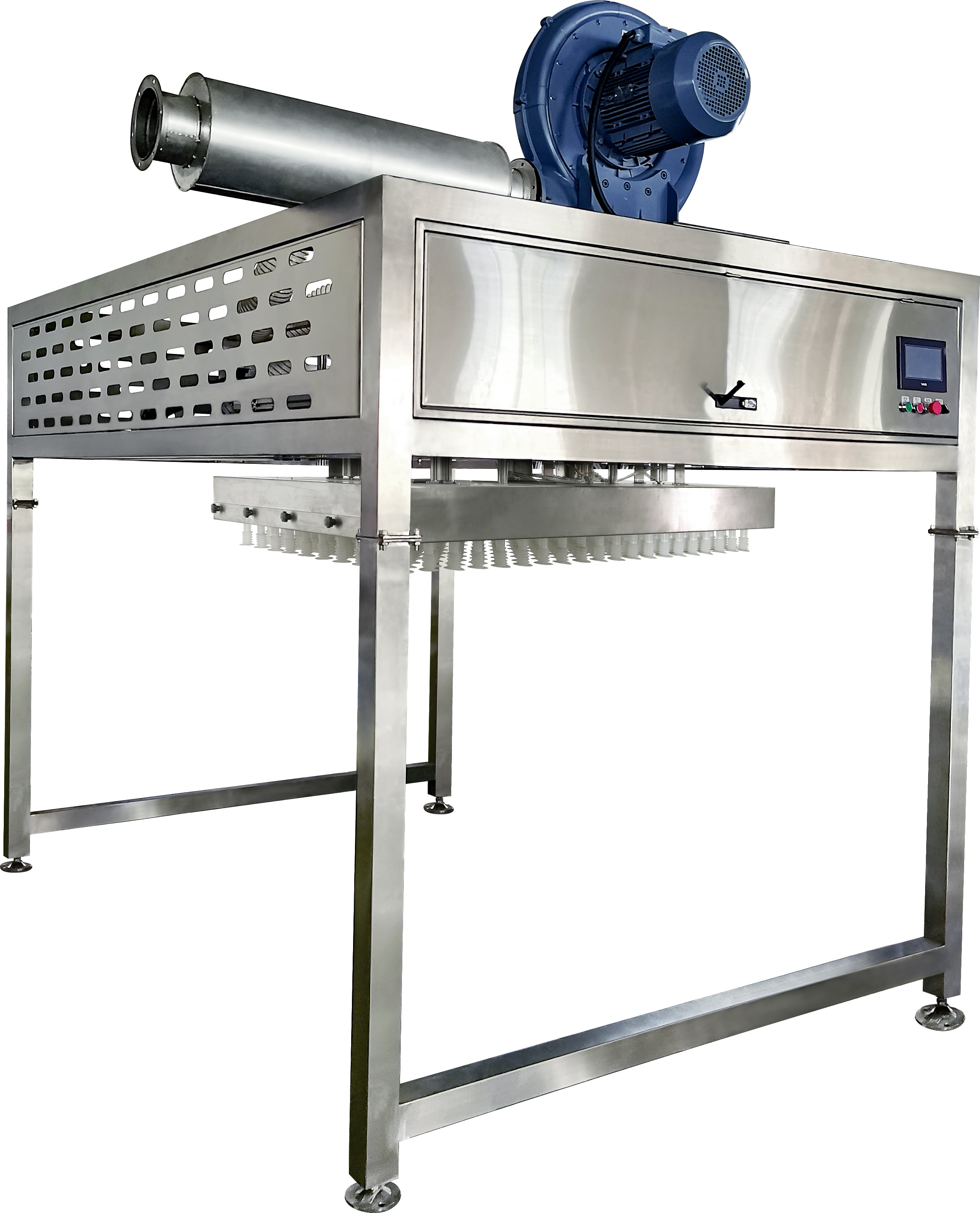
A demolding machine is specialized equipment that automatically separates finished products from molds. By operating method, common types include tray-tipping, push-out/ejector, vacuum suction cup, and robotic pick-and-place systems. Tray-tipping demolding machines mechanically flip baking trays and let products fall out naturally by gravity. Vacuum suction cup and pin-type demolders use negative pressure or precise gripping to “lift” bread, cakes, and other products from trays and gently place them onto conveyor belts. Whatever the form, the core goal is the same: replace manual flipping and knocking with controlled mechanical motion, completing demolding while ensuring products remain intact in appearance.
Practical Applications in Food Production
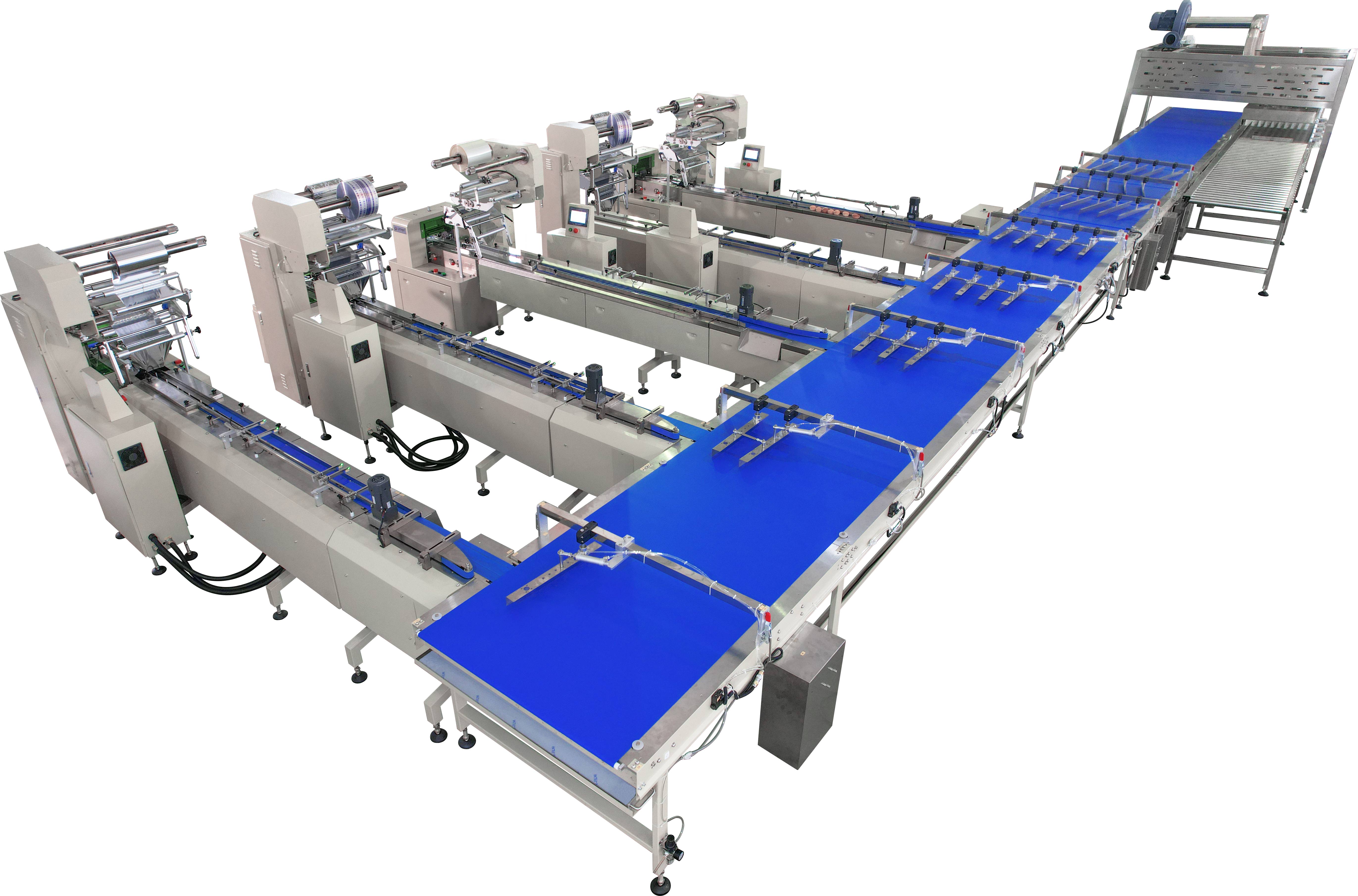
Demolding machines are far more widely applicable than one might imagine. In baking, mature demolding solutions already exist for toast bread, hamburger buns, cakes, mooncakes, croissants, and other products. For frozen set products such as mousse cakes, which previously relied on localized heating with hair dryers or forced separation with scrapers and were prone to edge melting and deformation, dedicated demolding machines can complete separation at low temperatures while maintaining product appearance. In confectionery and condiment production, demolding machines also play a role: whole trays of soft candy and hard candy can be demolded using dedicated equipment. After introducing intelligent demolding machines for hot pot base seasoning, demolding for the same output was reduced from 4 workers on two shifts taking 3 hours to fully automatic completion in 2 hours, while a zero-contact process ensured the integrity of the base. From “workers moving around molds” to “molds moving along the line,” demolding machines are becoming an indispensable link in continuous production lines.
Future Prospects
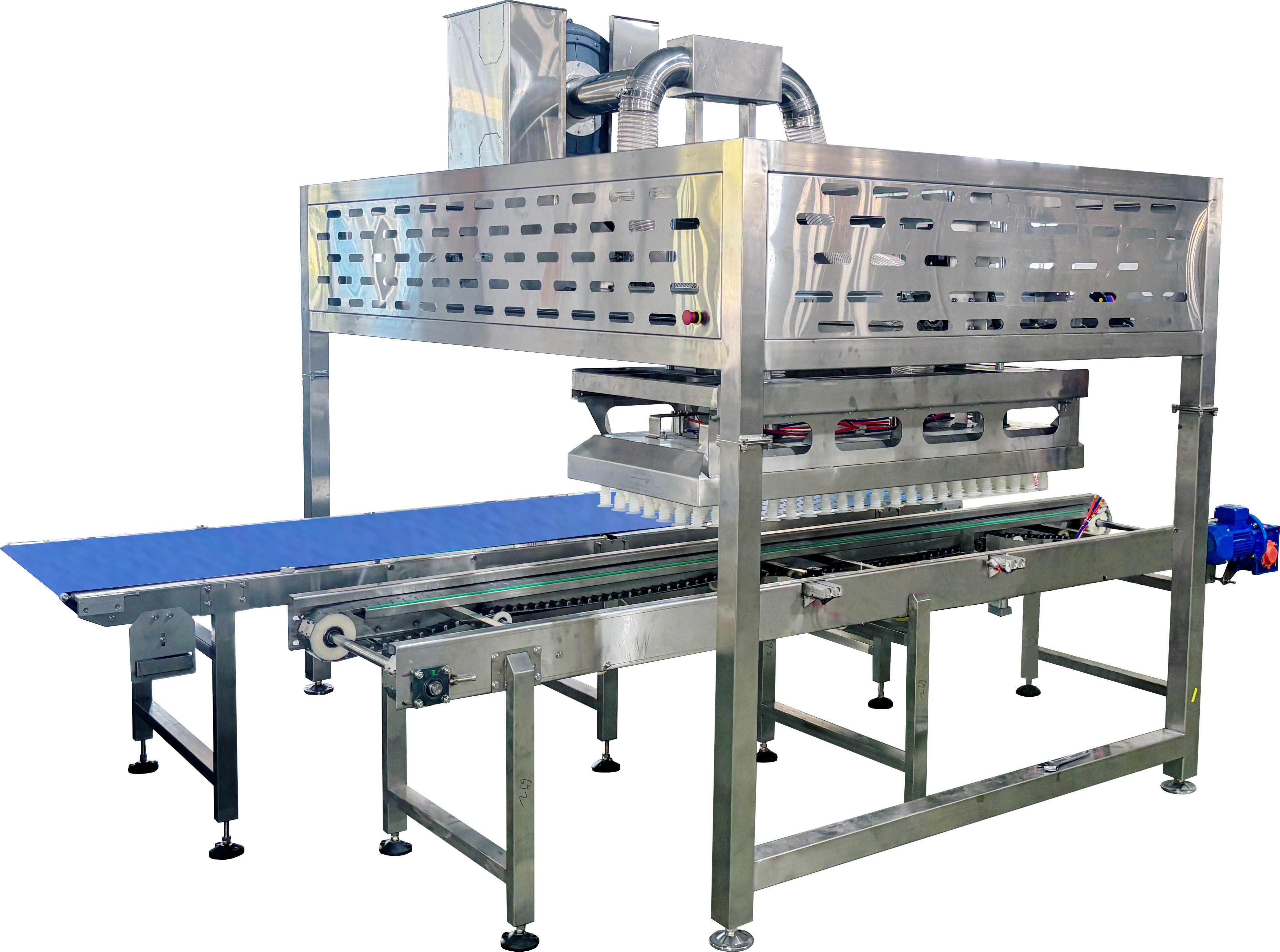
The direction of demolding machine development is already clear. First, intelligence: the share of high-end equipment with automatic pressure adjustment, intelligent temperature control, remote monitoring, and fault diagnosis is rising rapidly. AI algorithms and machine vision are being used to optimize demolding paths and identify product positions, further reducing damage rates. Second, integration: demolding machines no longer exist as isolated stations but are seamlessly connected with forming, baking, cooling, and packaging systems, and are gradually being integrated into MES systems to meet food production traceability and data management needs. Third, flexibility: consumer demand for diverse product forms is driving equipment toward rapid mold switching and compatibility with irregular molds, so that a single machine can handle production tasks with different specifications and shapes. For food manufacturers, the level of automation in the demolding step is becoming a practical benchmark for overall line efficiency and quality stability.