 EN
EN
 AR
AR
 FR
FR
 PT
PT RU
RU
 ES
ES
 ID
ID
 TH
TH
 KO
KO
 JA
JA
 VI
VI
 NL
NL
 IT
IT DE
DE

Cartoner Horizontal: Inti Cerdas Jalur Pengemasan Modern
Cartoner Horizontal: Inti Cerdas dari Jalur Pengemasan Modern
I. Apa Itu Cartoner Horizontal?
Sebuah cartoner horizontal otomatis adalah mesin pengemas yang sangat efisien dan menggunakan metode konveyor bahan secara horizontal. Melalui alur kerja terotomatisasi, mesin ini menyelesaikan proses-proses seperti pemasukan kotak karton, pembukaan kotak karton, pemuatan produk, serta penutupan kotak karton, sekaligus menempatkan berbagai produk beserta selebaran ke dalam kotak karton lipat. Model canggih juga mampu menjalankan fungsi tambahan seperti penyegelan label atau pembungkusan menyusut (shrink wrapping).
Dibandingkan dengan cartoner vertikal, desain horizontal menawarkan jangkauan adaptabilitas produk yang jauh lebih luas, mampu menangani beragam jenis produk—mulai dari vial farmasi dan kemasan blister hingga sabun, makanan, dan suku cadang otomotif. Fleksibilitas ini menjadikan cartoner horizontal sebagai pilihan utama bagi jalur pengemasan di berbagai industri.
II. Prinsip Kerja Cartoner Horizontal
Seluruh proses cartoner horizontal—mulai dari pemasukan blank karton hingga keluaran kemasan jadi—dapat dibagi menjadi empat tahap utama:
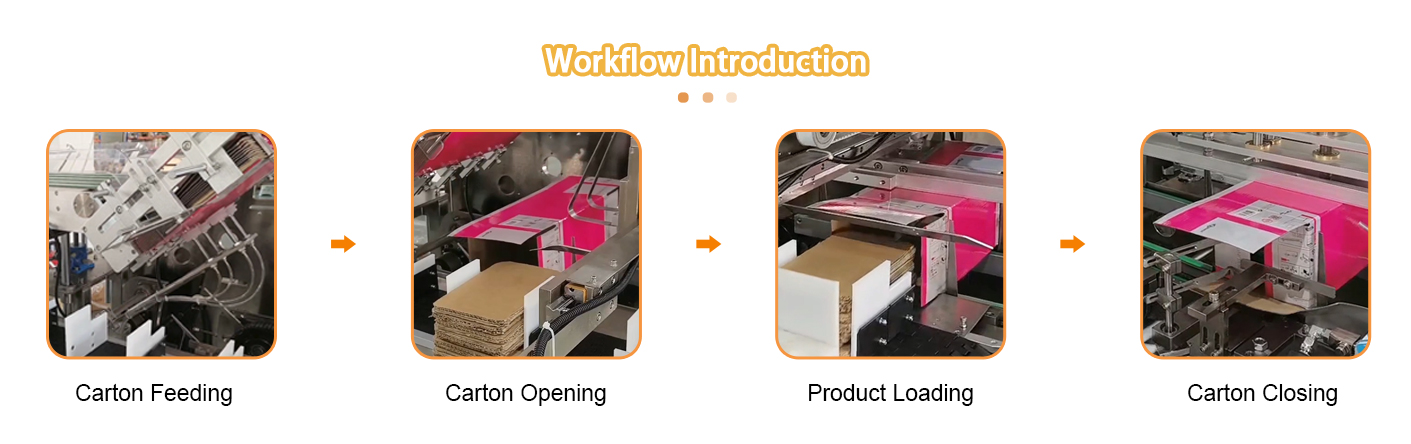
1. Pemasukan Karton
Sebuah cup hisap mengambil blank karton dari magasin dan menurunkannya ke jalur transportasi utama karton, di mana rel penuntun memastikan posisinya tetap stabil.
2. Pembukaan Karton
Sebuah pelat dorong membuka karton, sementara dua lengan penposisi bergerak naik dari bawah untuk mengamankan karton dari depan dan belakang, sehingga membukanya membentuk sudut siku-siku dan mendorongnya maju ke zona pengisian.
3. Pengisian Produk
Setelah berada pada posisi yang tepat di atas konveyor, produk didorong secara horizontal ke dalam karton oleh mekanisme dorong. Mesin modern umumnya dilengkapi tiga saluran masuk—saluran masuk produk, saluran masuk selebaran, dan saluran masuk karton—memungkinkan pengisian simultan produk dan selebaran yang telah dilipat dengan benar.
4. Penutupan Karton
Setelah pemuatan, mesin membengkokkan penutup lipat karton, dan pelat dorong menutup tutupnya dengan memasukkan penutup lipat ke dalam karton serta mengamankan kuncinya. Setelah selesai, karton secara otomatis tersegel dan produk jadi dikeluarkan ke lokasi yang telah ditentukan.
Seluruh alur kerja dipantau dan dikendalikan secara real time oleh sistem kontrol PLC, yang dilengkapi dengan penggerak servo dan jaringan sensor guna memastikan sinkronisasi presisi pada setiap tahap. Peralatan ini juga dilengkapi mekanisme keselamatan, seperti penghentian otomatis bila tidak ada karton, penolakan karton kosong apabila selebaran hilang, serta peringatan kesalahan—sehingga secara efektif menjamin kelangsungan produksi dan kualitas produk.
III. Ruang Lingkup Aplikasi dan Industri
Berkat tingkat otomatisasi yang tinggi serta kemampuan adaptasi yang fleksibel, cartoner horizontal memainkan peran krusial di berbagai industri.
Industri Farmasi: Digunakan untuk pengemasan otomatis blister pack, botol, ampul, dan vial, dengan pelipatan selebaran (leaflet), pencetakan nomor lot, dan penyegelan kardus secara bersamaan. Mesin-mesin ini memenuhi standar CPOB (Cara Pembuatan Obat yang Baik) dalam hal kebersihan dan ketepatan. Dalam tender pengadaan, produsen sering mengharuskan peralatan yang mampu mewujudkan otomatisasi penuh dari proses pengemasan blister dan flow packing hingga cartoning, penimbangan, serialisasi, pengemasan ke dalam case, serta paletisasi.
Industri Makanan: Cocok untuk mengemas biskuit, cokelat, mie instan, pangsit, dan produk sejenisnya. Mendukung pengemasan ke dalam kardus dengan baki dalam (inner tray) serta kompatibel dengan teknologi pengawetan guna memperpanjang masa simpan. Selain itu, mesin ini sangat adaptif terhadap model produksi berjumlah kecil namun beragam produk.
Industri Kosmetik & Bahan Kimia Harian: Menangani produk seperti lipstik, krim, pasta gigi, sikat gigi, sabun, dan deterjen bubuk. Mampu melakukan cartoning perakitan multi-unit, sehingga meningkatkan estetika dan fleksibilitas kemasan.
Aplikasi Diperluas Lainnya: Mencakup kemasan untuk suku cadang perangkat keras, komponen otomotif, produk elektronik, dan produk budaya seperti kartu remi. Dalam logistik e-niaga, sistem ini dapat diintegrasikan dengan robot penyortir untuk mencapai pengemasan dan penyegelan kotak secara otomatis.
IV. Tren Pengembangan Masa Depan
Dengan semakin cepatnya laju transformasi cerdas dalam manufaktur global, pasar cartoner horizontal menunjukkan pertumbuhan stabil. Pada tahun 2024, penjualan global cartoner horizontal otomatis mencapai USD 703 juta, dan diperkirakan tumbuh menjadi USD 879 juta pada tahun 2031, dengan CAGR sebesar 3,3%. Pasar global cartoner horizontal berkecepatan tinggi telah mencapai RMB 2,35 miliar pada tahun 2024, dan diproyeksikan mendekati RMB 3,02 miliar pada tahun 2031.
Arah pengembangan teknologi utama saat ini dan di masa depan meliputi:
Integrasi Mendalam Teknologi Cerdas dan Digital: Pasar cartoner horizontal otomatis semakin menerapkan prinsip-prinsip Industri 4.0 untuk meningkatkan konektivitas dan pengambilan keputusan berbasis data. Cartoner cerdas modern mengadopsi arsitektur fusi multi-sensor dan komputasi tepi, memungkinkan pemrosesan data secara real-time di lokasi serta pengambilan keputusan otonom.
Penerapan Teknologi Inspeksi Visual dan Kecerdasan Buatan: Cartoner canggih dilengkapi susunan kamera berdefinisi tinggi yang melakukan pemantauan real-time 100% terhadap posisi produk dan status penutupan karton. Algoritma Kecerdasan Buatan dapat secara otomatis memperbaiki penyimpangan pengambilan, sehingga menurunkan tingkat kelalaian dari rata-rata industri sebesar 3% menjadi di bawah 0,05%.
Pergantian Digital dan Produksi yang Fleksibel: Teknologi pergantian cerdas mengubah penyesuaian mekanis konvensional menjadi pengendalian digital, dengan menggunakan program pra-atur untuk secara otomatis memposisikan dan menyesuaikan komponen mekanis. Hal ini secara signifikan mengurangi waktu pergantian serta memungkinkan produksi yang fleksibel untuk berbagai macam produk dalam jumlah kecil.
Efisiensi Energi Hijau dan Pengembangan Berkelanjutan: Kartoniser generasi berikutnya terus berinovasi dalam pengurangan konsumsi energi dan minimalisasi limbah bahan, guna memenuhi tuntutan industri global terhadap konservasi energi dan pengurangan emisi.
V. Peralatan yang Dapat Dihubungkan
Kartoniser horisontal otomatis berfungsi sebagai pusat dalam lini produksi pengemasan modern, mampu terintegrasi tanpa hambatan dengan berbagai peralatan hulu dan hilir:
Peralatan yang Dapat Dihubungkan ke Hilir: Mesin pengemas blister, mesin pengemas flow pack, mesin pengisi, dan mesin pelabel. Dalam lini produksi farmasi, mesin pengemas blister membentuk rongga blister dan menyegel tablet, setelah itu keluarannya dapat langsung dihubungkan ke cartoner horisontal untuk menyelesaikan proses pengisian karton.
Peralatan yang Dapat Dihubungkan ke Hulu: Case packers ,mesin paletisasi, mesin penyegel karton, sistem pencetakan kode/serialisasi, dan timbangan inline. Dalam tender pengadaan perusahaan, cartoner sering kali diharuskan berinterfase dengan peralatan otomasi berikutnya, membentuk sistem pengemasan akhir-baris (end-of-line) yang lengkap yang mencakup penimbangan, pembungkusan menyusut (shrink wrapping), dan paletisasi.
Dasar Teknologi Konektivitas: Pengendalian sinkron dicapai antara mesin pelipat karton (cartoner) dan peralatan hulu/hilir melalui encoder, sensor, serta sistem servo, sehingga memungkinkan penyesuaian kecepatan secara real-time guna menyesuaikan laju pasokan dan pengiriman bahan. Mesin pelipat karton modern menggunakan protokol komunikasi industri standar seperti Modbus, Profibus, dan EtherNet/IP, serta mendukung integrasi data dengan sistem MES dan SCADA untuk manajemen informasi menyeluruh di tingkat lini produksi serta pemantauan operasi jarak jauh.
VI. Penempatan dalam Mesin Otomasi Industri
Mesin pelipat karton horizontal berperan sebagai tautan inti yang menghubungkan operasi hulu dan hilir dalam lini produksi pengemasan modern. Di bawah strategi nasional seperti Made in China 2025, kebijakan manufaktur cerdas mendorong adopsi peralatan canggih guna meningkatkan daya saing industri secara keseluruhan, sehingga mempercepat permintaan terhadap peralatan kelas atas, termasuk mesin pelipat karton.
Cartonizer horizontal saat ini sedang berkembang dari mesin mandiri menuju integrasi mendalam ke dalam "jalur produksi" dan "sistem". Peralatan ini secara mendalam terintegrasi ke dalam sistem eksekusi manufaktur (MES) untuk memungkinkan verifikasi proses cartoning dan manajemen serialisasi, sekaligus terhubung ke platform Internet of Things Industri (IIoT). Hal ini menempatkan cartonizer horizontal sebagai simpul data utama sekaligus terminal eksekusi produksi ramping di dalam pabrik cerdas, berperan sebagai kendaraan teknologi krusial yang mendorong industri pengemasan cerdas global menuju paradigma Industri 4.0.